
How to plan an artificial putting green
An artificial putting green can turn an underused part of a property into a space for practice, competition and everyday enjoyment.
But the most convincing greens are not created by laying putting turf over a convenient patch of ground. The shape, contours, drainage, hole positions, surrounding landscape and intended style of play all influence how the finished green performs.
A compact backyard green for casual family use will need a different design from a practice area intended to challenge an experienced golfer. A commercial or shared facility may also need to accommodate heavier traffic, accessibility and a wider range of users.
Planning those details before construction helps create a green that looks integrated into the site and remains interesting long after the first few rounds.
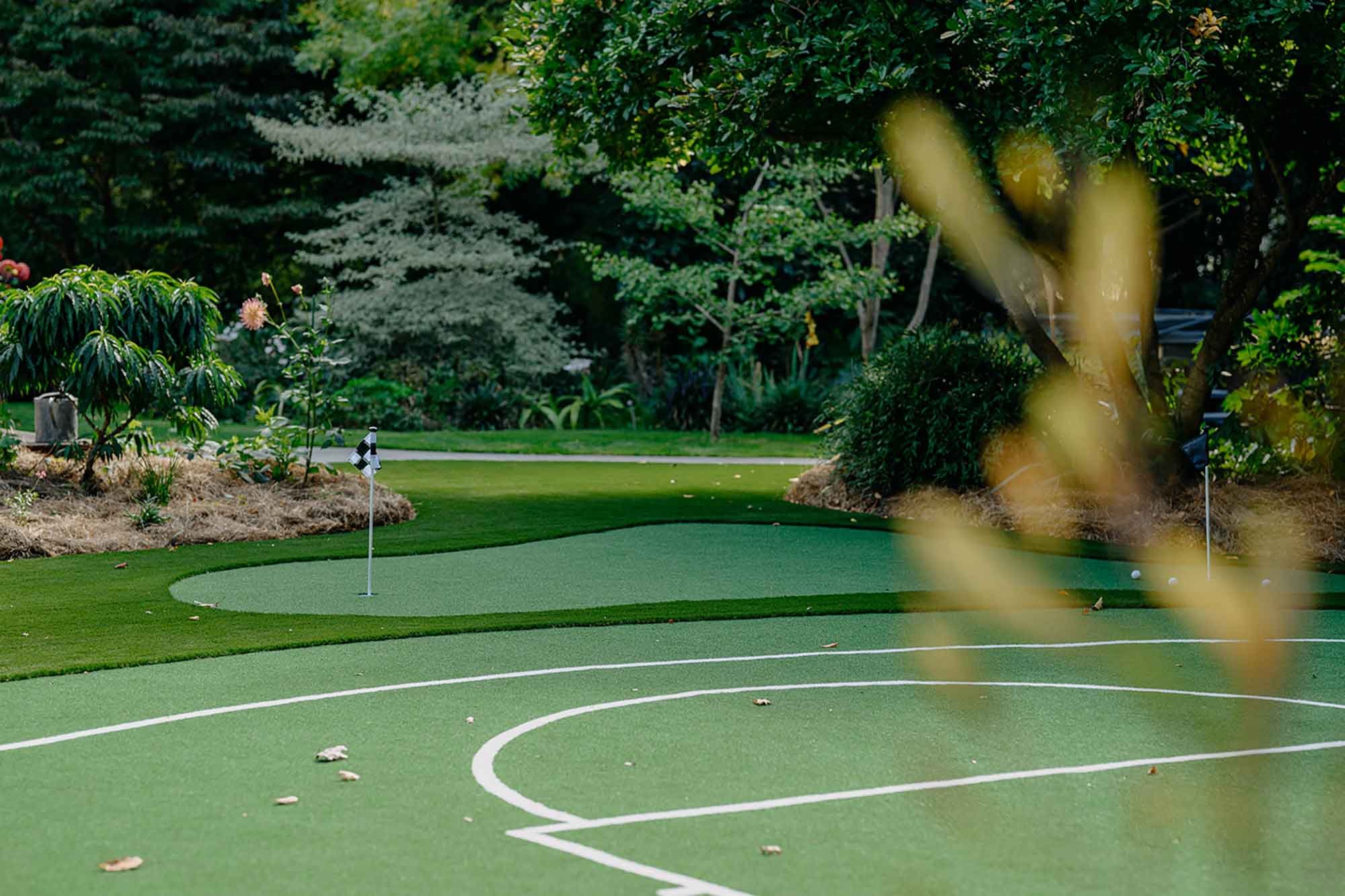
Start with how you want to use the green
Before choosing a size or shape, decide what you want the putting green to do.
Are you looking for a fun backyard feature, a realistic place to practise, an activity for guests and customers, or a combination of these? Do you mainly want to work on short straight putts, or would different breaks, approach angles and distances make the space more useful?
A practice-focused green benefits from variety. Multiple hole positions, changes in direction and enough room to putt across different slopes can create more training value than a larger but completely flat surface.
For family or social use, the priorities may be simpler: an inviting layout, manageable difficulty and easy connections to outdoor living areas. Sportsplay’s artificial putting-green options show how the system can be adapted for residential and commercial spaces.
If the green will form part of a golf club, accommodation venue or shared facility, consider how it will be operated as well as how it will play. Capacity, access, supervision, equipment storage and the experience of less-confident users may all influence the layout.
Choose the location carefully
An artificial putting green does not depend on the same growing conditions as natural grass, but the location still matters.
The area needs suitable access for excavation, base materials and installation. Existing levels affect how much preparation is required. Water must be able to move away from the green, and surrounding trees may increase the amount of leaf debris and organic material that needs to be removed.
Think about how the green will sit within the wider property. A location visible from a deck, office, clubhouse or accommodation area can make the feature feel more connected and encourage regular use.
Also consider where a missed or deliberately played ball could travel. Nearby windows, roads, fences, slopes and neighbouring properties may influence the safest orientation and whether the space should be designed for putting only or include chipping.

How much space do you need?
There is no single minimum size that suits every artificial putting green.
A small space can still support one or two holes and several useful putting lines if the shape and contours are designed carefully. Larger areas allow more separation between holes, longer putts and greater variation.
Rather than filling every available metre with putting turf, it can be more effective to combine a well-designed green with fringe turf, planting, paths, seating or another recreation surface.
The usable size will also depend on access, existing structures, required edges and how the green meets the surrounding landscape. Starting with a measured site plan makes it easier to compare what is technically possible with what will actually be enjoyable to use.
Plan variety into the shape, contours and hole positions
A good putting green should give you more than one repeated putt.
Curves can create different starting points and visual interest, but the shape should still allow clear, useful putting lines. Hole positions need enough surrounding area to receive putts from several directions. Placing every cup close to an edge can limit the range of play.
Subtle changes in level can create breaks and challenge. Those contours need to be intentional. Random bumps or overly severe slopes can make the surface frustrating and reduce the number of playable positions.
Think about the green as a collection of practice routes rather than a single surface. One hole might allow a short straight putt, a longer cross-green attempt and a breaking putt from another angle. That creates more variety without necessarily increasing the total area.
The relationship between contours and cup positions also matters. A dramatic break may be useful in one part of the green, while flatter areas help with alignment, pace control and beginner-friendly play.
The design should balance difficulty with the experience of the intended users. An experienced golfer may want more demanding breaks, while a family, school or hospitality green should remain approachable.
For golfers wanting a refresher on putting-green rules and etiquette, Golf New Zealand’s rules resources and The R&A’s Rule 13 overview provide useful supporting information.
Why base preparation matters
The turf is only the visible layer of the putting green. The shape and consistency of the base underneath it largely determine the final result.
The area generally needs to be excavated and prepared to create stable levels, drainage and the planned contours. Base materials are placed and compacted before the putting surface is installed.
Small imperfections that might be less noticeable beneath a longer landscape turf can affect the roll of a golf ball. That is why careful preparation and finishing are particularly important for putting greens.
The required construction will depend on the soil, existing surface, access, drainage and design. A site assessment is the best way to determine what needs to happen below the turf.
Build drainage into the design
Artificial turf allows water to pass through, but the complete installation still needs somewhere for that water to go.
If the existing area holds water or receives runoff from surrounding paving, roofs or sloping ground, those conditions should be addressed during planning. Low spots beneath or around the green can affect performance and create ongoing maintenance problems.
The base profile, surrounding levels and edge details should work together to move water away appropriately. Drainage should be designed for the site rather than assumed to be solved by the turf alone.
Choose putting turf for performance, not just appearance
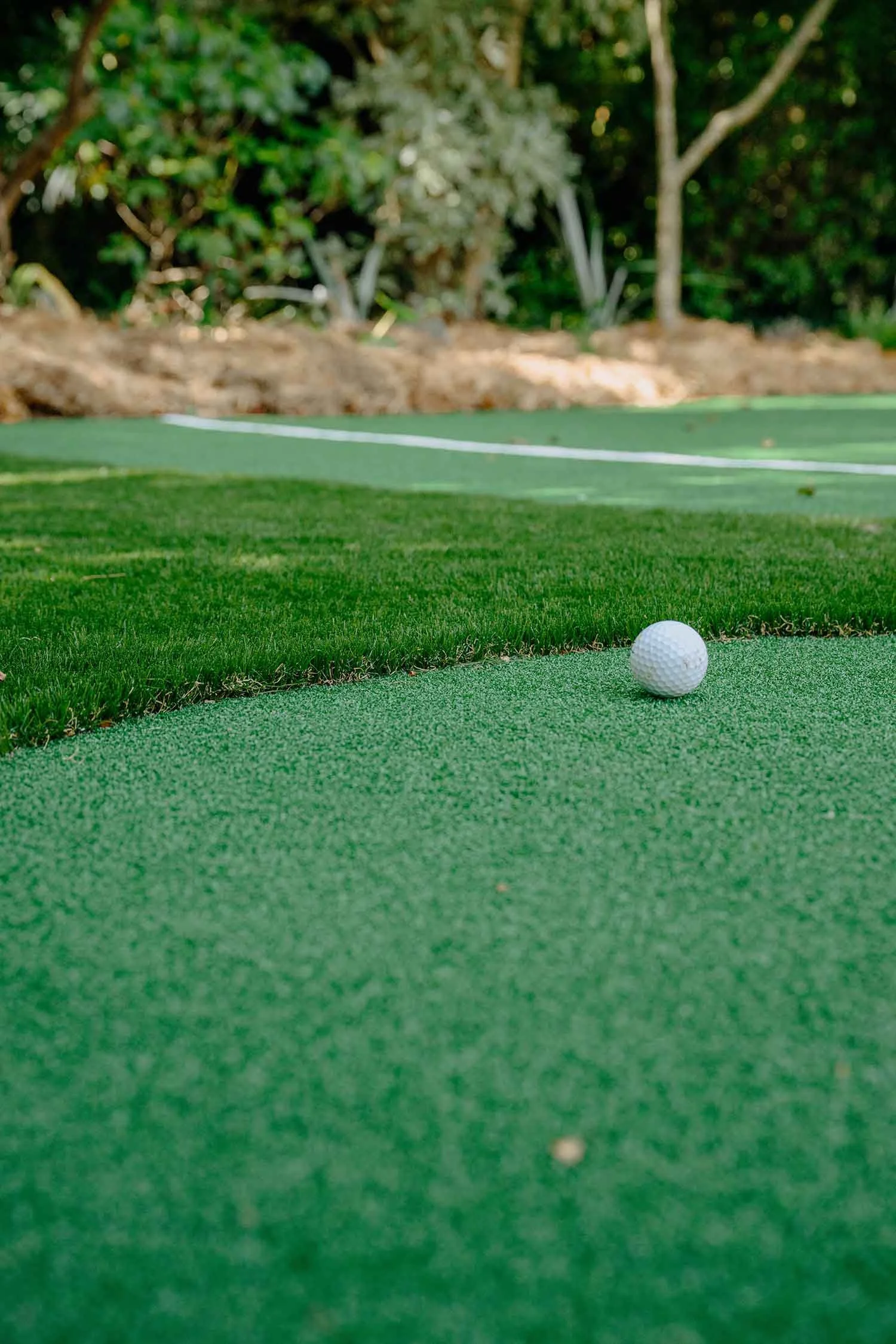
Putting turf is designed to provide a short, consistent surface for ball roll. It is different from the longer artificial grass typically used for lawns or general recreation.
The selected system influences speed, feel and how consistently the ball tracks. The design and installation of the base also affect those characteristics, so turf choice and construction need to be considered together.
Think about the experience you want rather than chasing the fastest possible surface. A very fast green may appeal to an experienced golfer but feel less enjoyable for casual users.
Consistency is often more valuable than headline speed. A green that rolls predictably across several useful lines can support better practice and remain enjoyable for a wider group of users.
Fringe or longer artificial turf can be added around the putting surface to create contrast, provide approach areas and help the feature sit naturally within the wider landscape. Sportsplay’s wider artificial-turf systems can also be considered where the green connects with another recreation zone.
Consider holes, cups and surrounding features
The number of cups should reflect the size and shape of the green. More holes do not automatically create more variety if they leave insufficient room for useful putting lines.
Flags and removable cups can add to the playing experience, while fringe areas, small bunkers, rocks, planting and contour changes can create a more natural-looking setting.
Some projects combine a putting green with a basketball area, artificial lawn or other family recreation space. Planning these elements together helps levels, paths, drainage and movement between zones make sense.
Sportsplay’s Putt and Play project shows how a custom putting green, residential turf and compact basketball court can form one connected backyard design. If a court is part of the plan, our basketball-court options provide further examples of residential and shared-use layouts.
How much maintenance does an artificial putting green need?
An artificial putting green avoids mowing, feeding and watering, but it still benefits from regular care.
Leaves and debris should be removed before they break down on the surface. The turf may need brushing or other maintenance appropriate to the installed product and level of use. Edges, cups and surrounding drainage points should also be checked periodically.
Keeping soil and organic material from nearby garden beds off the green can reduce weed and moss issues. Any damage or change in the surface should be assessed early.
Sportsplay can provide maintenance guidance for the selected system and setting.
What affects the cost of an artificial putting green?
Cost depends on much more than the number of square metres of turf.
Site access, excavation, disposal, base preparation, drainage, contours, the selected turf system, the number of cups and the surrounding finishes all influence the project.
A small but highly shaped green with difficult access may require more work than a larger, straightforward area. The clearest quote comes from an agreed design and an assessment of the site rather than a generic square-metre rate alone.
What to prepare before requesting a design
You do not need to have every detail resolved before talking to an installer, but a few pieces of information help start the conversation.
Photographs and approximate measurements are useful, along with details about access and any known drainage issues. Explain who will use the green, whether it is mainly for practice or entertainment, the types of putts you want to play and any wider landscaping or recreation work planned around it.
If you already have preferences around speed, number of cups, chipping, fringe areas or visual style, include them. They can be tested against the available space rather than treated as fixed requirements before the site has been assessed.
From there, Sportsplay can help translate the available space into a practical putting-green layout and recommend a suitable system.
Thinking about adding a backyard, commercial or community putting green? Share your space and ideas with Sportsplay, and we’ll help you plan the layout, contours, drainage and turf system.
FAQs
-
There is no single minimum size. A compact area can still create several useful putting lines when the shape, cup positions and contours are planned carefully. The best size depends on the available site and how you want to use it.
-
Yes. Water can pass through suitable putting turf, but the base and surrounding levels must still direct it away from the area. Existing water pooling or runoff should be addressed during the design.
-
Potentially, depending on the size, turf system, surrounding space and safety of the site. If chipping is important, it should be included in the design brief so the green and approach areas can be planned accordingly.
-
Speed varies according to the turf system, base, installation and maintenance. The target should be an enjoyable and consistent playing experience suited to the users, rather than simply the fastest possible roll.
-
Its service life depends on the product, construction, exposure, traffic and maintenance. Correct base preparation, drainage and routine care all contribute to reliable long-term performance.