
Tennis, padel and pickleball courts: requirements, dimensions and surface options
Tennis, padel and pickleball are closely related racquet sports, but their courts are not interchangeable.
They differ in size, enclosure, line markings, net setup and the way the ball interacts with the playing area. Pickleball can often be introduced to an existing hard court through carefully planned markings and equipment. Padel, by contrast, depends on a purpose-built enclosed court because the walls form part of the game.
For an experienced court owner, the key questions may be surface pace, run-off, lighting, utilisation and compliance. A school principal planning a first court may simply need to understand how much space is required, which activities it can support and what will make the facility practical for everyday use.
This guide provides a high-level comparison for both audiences. Final dimensions, clearances and construction details should always be confirmed against the intended level of play, the site and the current requirements of the relevant sporting body.
How do tennis, padel and pickleball court dimensions differ?
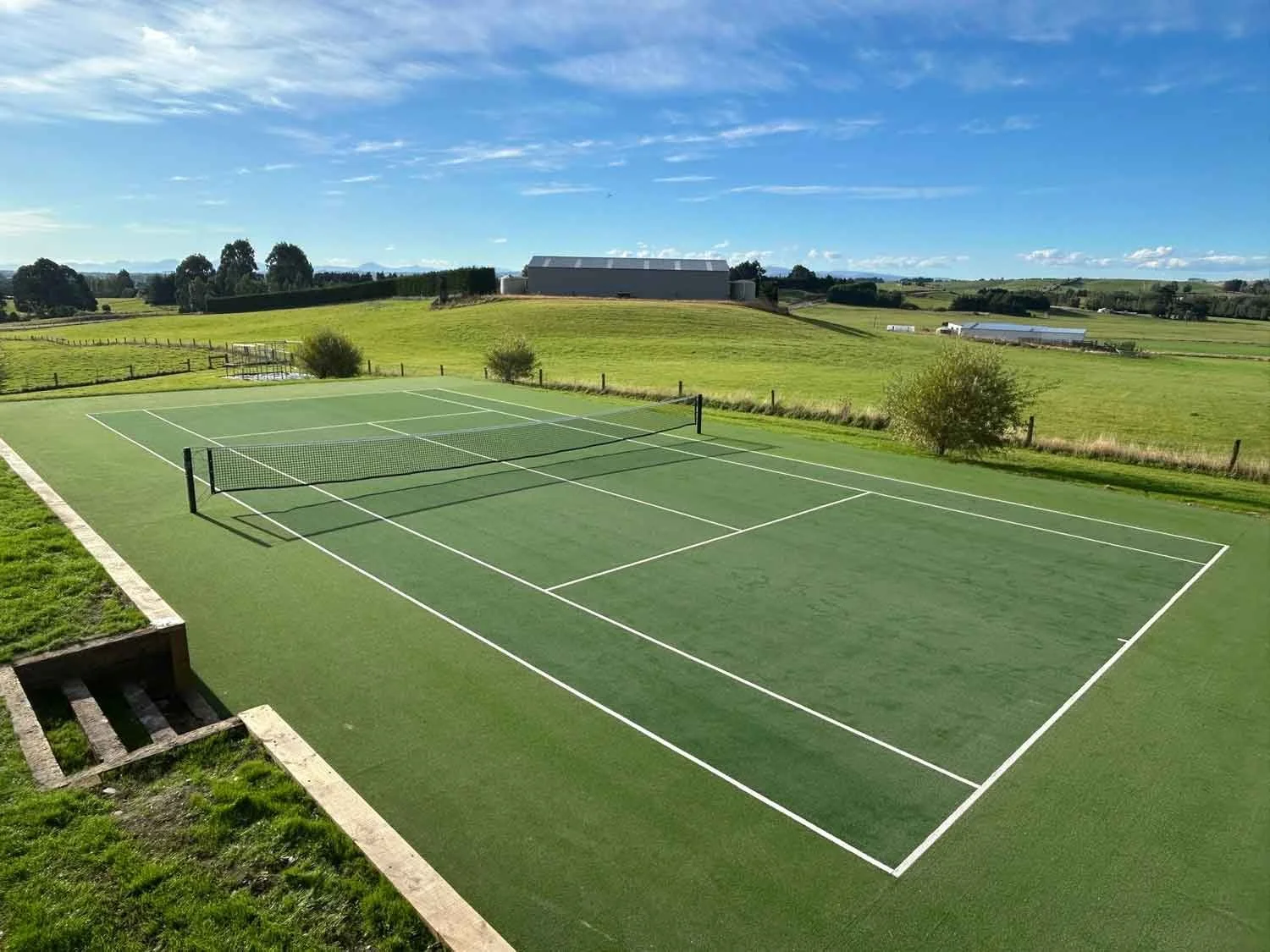
A standard tennis court is 23.77 metres long. It is 8.23 metres wide for singles and 10.97 metres wide for doubles. Tennis New Zealand aligns its facility information with International Tennis Federation technical specifications, and its court-resurfacing guidance is a useful starting point for New Zealand clubs and court owners.
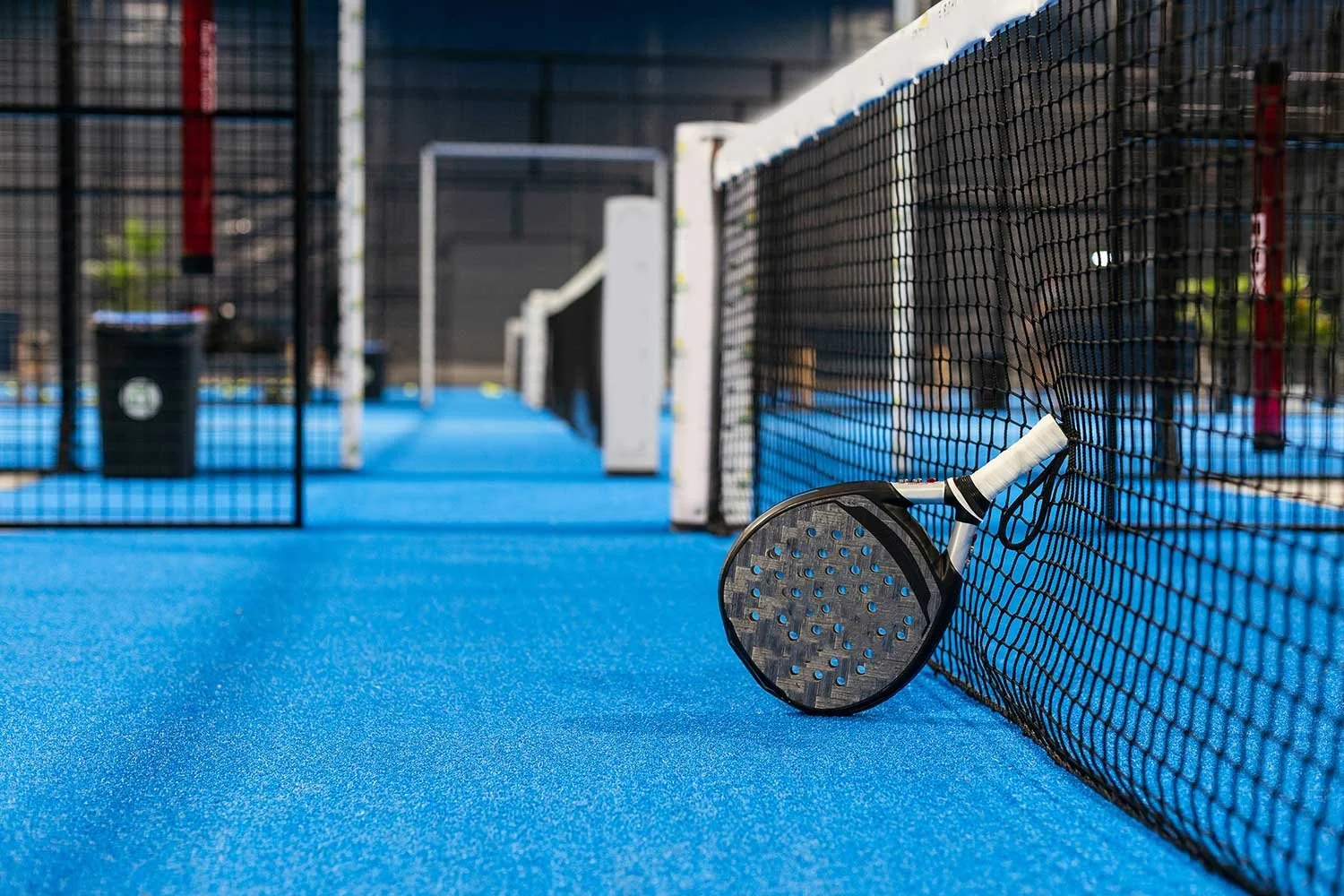
A padel court has an internal playing surface of 20 metres by 10 metres. Unlike tennis, it is enclosed, and the walls and mesh form part of play. Padel New Zealand provides an accessible overview of the sport, court and equipment requirements.
A pickleball court measures 13.41 metres long by 6.09 metres wide for both singles and doubles. It also includes a non-volley zone extending 2.13 metres from the net on each side. Pickleball New Zealand explains the court layout, net heights and basic rules.
These are the marked playing dimensions, not necessarily the complete project footprint. Safe movement around the court, fencing, gates, lighting, equipment and connections to surrounding spaces all require additional room. For competition facilities, confirm the latest requirements with the relevant governing body before the design is finalised.
The marked dimensions are only the starting point
A technically correct set of lines does not automatically create a court that works well.
Players need enough space to move beyond the baselines and sidelines without meeting a fence, wall, goal, seat or another activity area too quickly. The appropriate clearances depend on the sport, level of play and setting. A social school court and a competition venue may therefore use the same playing lines but require different overall footprints.
Orientation is another early decision. Where the site allows, outdoor courts are generally positioned to reduce the amount of time players spend looking towards a low sun. Existing buildings, boundaries, prevailing weather and topography may limit the ideal orientation, so this needs to be balanced against the realities of the site.
Lighting should be considered before construction rather than added as an afterthought. The design needs to provide useful, even coverage of the playing area while managing glare and spill towards neighbouring properties or other parts of the school or facility.
Access also matters. Gates, paths, accessible routes, storage and maintenance entry points should work with the court layout. For schools, it is worth considering how classes arrive, where students wait, how equipment is moved and whether the court will be available for community use outside school hours.
How do surface requirements differ?
All three sports need a stable, even and well-draining surface with reliable traction, but they do not require exactly the same playing response.
Tennis can be played on several surface types, each influencing pace, bounce and movement. Sportsplay designs tennis, padel and pickleball courts using systems selected around the intended users, level of play, existing base and maintenance expectations.
Padel is commonly played on a specialist synthetic turf system that works with the enclosure and movement patterns of the sport. The turf, infill, base, glass, mesh and lighting need to be treated as one coordinated court system rather than separate components.
Pickleball is commonly played on a firm court surface because consistent bounce and secure footing are important. A suitable acrylic system may be used for a dedicated court or as part of a shared hard-court layout.
Artificial sports turf can also be appropriate for tennis and flexible recreation spaces when the particular turf system delivers the required ball response and grip. The Southland tennis-court project shows how a purpose-selected Stamina turf surface was used to create a full-size court with integrated markings.
Experienced operators may already have a preferred pace or surface category in mind. Schools and first-time owners do not need to arrive with a technical specification. A clear description of the users, priority sports, frequency of play and desired maintenance level gives the designer a much stronger starting point than selecting a product on appearance alone.
Can you add pickleball to an existing tennis court?
In many cases, yes. The smaller pickleball footprint can fit within a tennis-court area, making it an appealing way to increase the use of an existing facility.
The line plan needs careful thought. Permanent pickleball markings are convenient, but too many overlapping lines can make both sports harder to follow. A clear colour hierarchy, portable nets or dedicated pickleball zones may help, depending on how frequently each sport is played.
The existing surface, levels, drainage, fencing and available clear space should also be assessed. If the court is worn, adding markings alone may not provide the playing experience or durability expected from the upgraded facility.
Court owners should also think about scheduling and capacity. One tennis court may accommodate several pickleball playing areas, but the most suitable arrangement depends on access, supervision, net setup and whether tennis and pickleball need to operate at the same time.
Can tennis and padel share the same court?
Not in the same way that tennis and pickleball can.
Padel requires a smaller enclosed court with walls that are used during play. A tennis court cannot become a regulation padel court simply through new markings and a different net.
A larger site may accommodate separate tennis and padel courts within one facility. Shared access, amenities, lighting infrastructure or spectator areas may create efficiencies, but each playing area still needs to be designed around its own sport.
What works best for a school or multi-sport space?
For schools, the goal is often to create as much useful activity as possible from a limited area and budget.
Tennis and pickleball can work well within a multi-sport layout, particularly when the line hierarchy is clear and equipment can be changed efficiently. Basketball, netball and other games may also be incorporated when the surface, overall dimensions and surrounding clear space are appropriate.
A school does not necessarily need a competition-level facility for every marked sport. It does need a safe, understandable and durable space that supports the curriculum, lunchtime activity and the number of students likely to use it. Sportsplay’s school-court solutions provide more information about designing for high-use education environments.
The multi-sport courts at Oxford School combine tennis, basketball, netball, running and everyday play within one large facility. The Hinds School sports-court project shows how an ageing concrete court was transformed into a brighter turf space supporting tennis, pickleball and several other school activities.
Padel is more difficult to combine with general court use because of its permanent enclosure. It is usually best treated as a dedicated facility, although it may still sit within a wider racquet-sport or recreation precinct.
Before finalising a school court, map out the likely timetable, class sizes, lunchtime use, after-hours community access and primary sports. That exercise often reveals whether one flexible court or several more specialised areas will deliver better long-term value.
Planning the court beyond the surface
The long-term success of a racquet-sport court depends on decisions that may not be obvious in the finished photographs.
The base must be suitable for the selected system. Water needs a reliable path away from the playing area. Fencing should respond to the sport and surrounding environment. Lighting, power, gates, storage, net systems and maintenance access should be resolved before construction.
For an existing facility, a condition assessment can identify cracking, movement, drainage problems and other work required before resurfacing. This helps owners compare realistic whole-project options rather than judging surfaces only by their square-metre rate.
Future flexibility matters too. If pickleball participation or community use is expected to grow, allowing for later markings, equipment or additional courts may be more cost-effective than redesigning the facility after completion.
Approvals may vary with the site, structures, lighting and intended use. Schools, clubs and commercial operators should identify any consent, property, funding or stakeholder requirements early enough for them to influence the design.
Start with the sport, users and site
The best court is not necessarily the one that accommodates the largest number of line markings. It is the one that works well for its primary users and can be operated and maintained reliably.
Experienced court owners can come to Sportsplay with a detailed performance brief. Schools and first-time clients can start with the basics: who will use the court, which activities matter most, how often it will be used, the available space and the budget range.
Sportsplay designs and installs tennis, padel, pickleball and multi-sport surfaces for schools, clubs, commercial venues and private properties. We can help you understand the footprint, compare surface options and develop a practical layout around the opportunities and constraints of your site.
Planning a tennis, padel or pickleball court? Share your site, users and priority sports with Sportsplay, and we’ll help you explore the right layout and surface system.
FAQs
-
The marked court is 23.77 metres long and 8.23 metres wide for singles or 10.97 metres wide for doubles. Additional space is required beyond the playing lines, with the appropriate total footprint depending on the setting and level of play.
-
A standard padel court has an internal playing surface of 20 metres by 10 metres. It is enclosed by walls and mesh fencing that form part of play.
-
Pickleball New Zealand identifies the playing court as 6.09 metres wide by 13.41 metres long for both singles and doubles. Additional clear space should be provided around the court for player movement and safe operation.
-
Often, yes. Pickleball lines and a suitable net system can be added where the surface, dimensions and surrounding clear space are appropriate. The marking and operating plan should keep both sports easy to follow and practical to schedule.
-
Not necessarily. Padel commonly uses a specialist synthetic turf system within an enclosed court. Tennis can use several surface types, including suitable artificial turf and acrylic systems. The specification should be selected for the sport and intended playing characteristics.