
Artificial turf vs acrylic courts: which surface is right for your project?
Choosing the right surface is one of the most important decisions in any new sports-court or resurfacing project.
Artificial turf and acrylic can both create durable, attractive and highly usable courts, but they do not deliver exactly the same playing experience. The best option depends on who will use the space, which sports need to be accommodated, the existing base, the level of competition and how the facility will be maintained.
For a school court used for physical education, lunchtime play and several different sports, the priorities may be flexibility, comfort and reliable year-round use. A tennis club may place more emphasis on consistent ball response and recognised playing characteristics. A community or residential court may need to balance performance with colour, appearance and low maintenance.
Understanding those differences early makes it much easier to choose a system that fits the way the court will actually be used.
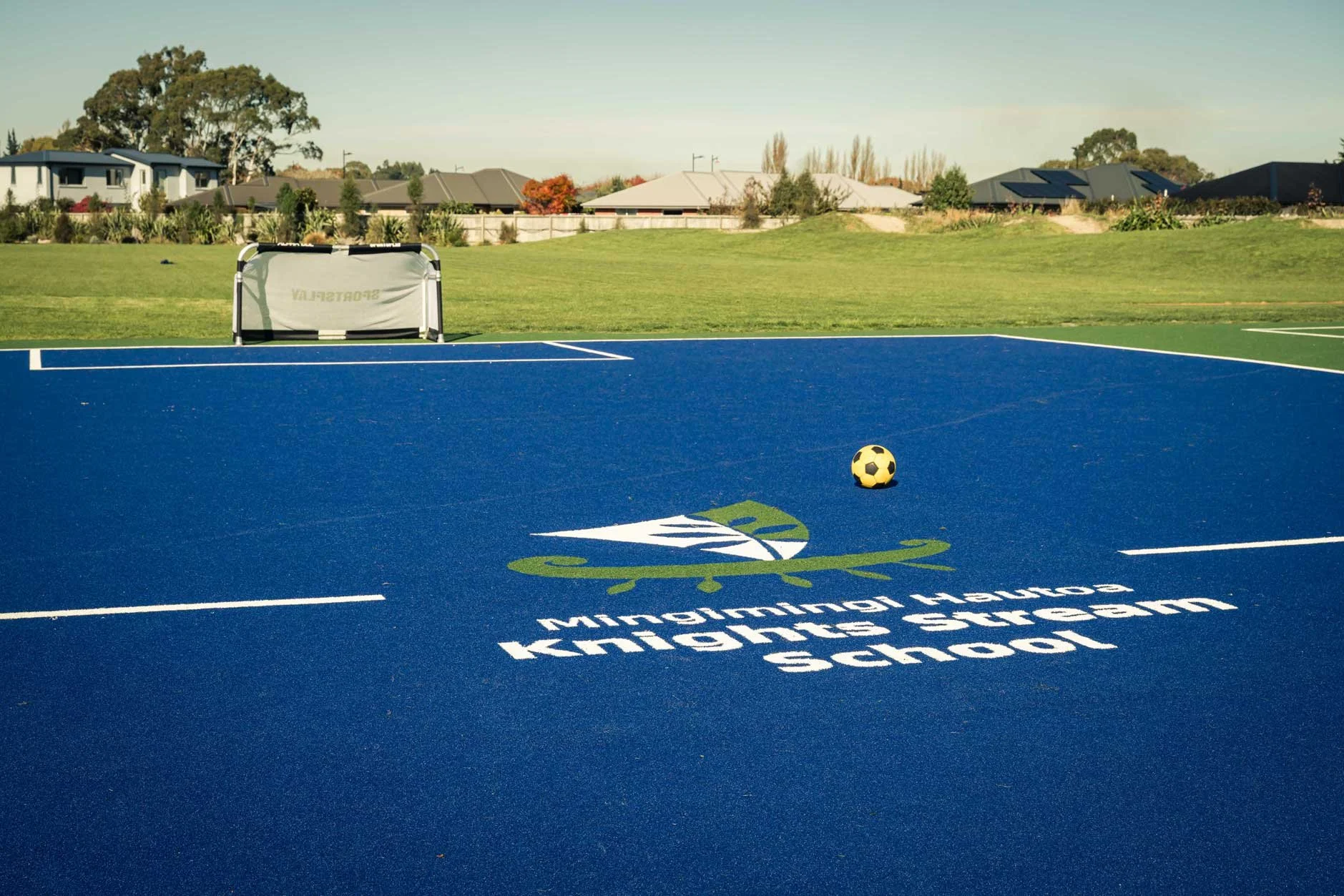
What is an artificial turf sports court?
An artificial turf court uses a purpose-designed synthetic turf system installed over a prepared and well-draining base. The turf product, pile height, infill and underlying construction are selected to suit the intended sports and level of use.
Turf courts can be marked for a single sport or configured as multi-sport spaces with different line colours. This makes them particularly useful for schools, community facilities and other environments where one court needs to support several activities.
The surface can also provide a more forgiving feel underfoot than a hard court. However, not every turf system is suitable for every sport, so the product must be selected around the required ball behaviour, traction and usage rather than appearance alone.
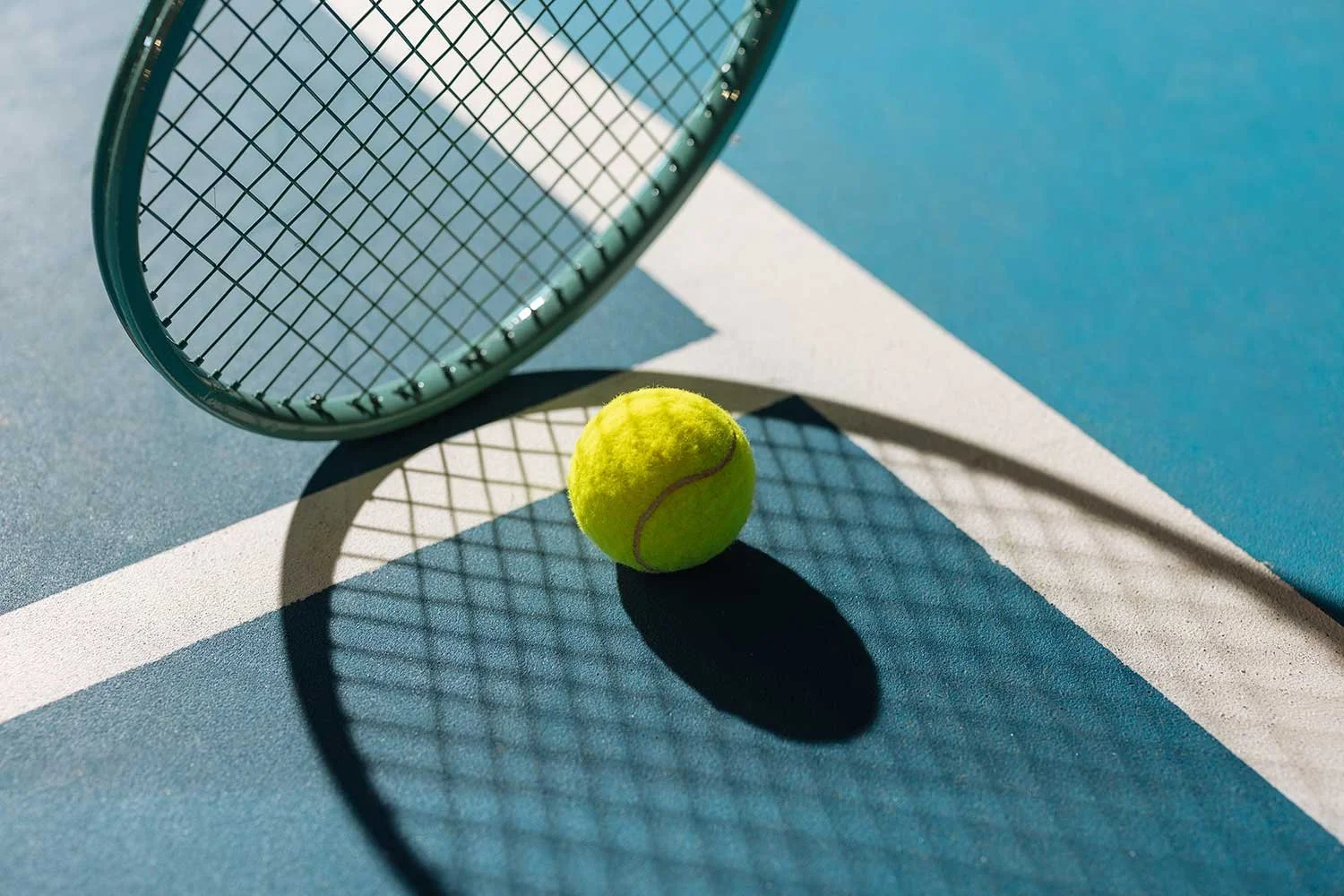
What is an acrylic sports court?
An acrylic court is a layered sports-surfacing system applied over a suitable hard base, commonly asphalt or concrete. It creates a smooth, coloured surface with clearly defined line markings and predictable playing characteristics.
Sportsplay offers Laykold® acrylic sports surfaces, which are designed for consistent playability, traction and long-term resilience. Different system specifications can be considered depending on the court, the existing base and the required level of cushioning.
Acrylic is widely associated with tennis, but it can also support basketball, netball, pickleball and multi-sport layouts when the court is designed and marked for those uses.
How do turf and acrylic feel during play?
The most noticeable difference is the way each surface feels and responds.
Artificial turf generally has more texture and give. That can make it comfortable for high-use school and recreation environments, while still providing the grip and stability required for the selected activities.
Its ball speed and bounce will depend on the turf system, pile and infill. A turf selected for tennis will not necessarily respond in the same way as one designed primarily for general recreation or a school multi-sport court.
Acrylic provides a firmer and more direct playing surface. Players often experience a consistent bounce, clear feedback underfoot and predictable movement across the court. This can be important where tennis, pickleball or another ball sport is the primary purpose. You can explore Sportsplay’s tennis, padel and pickleball court options for more detail.
Neither experience is automatically better. The right question is which playing characteristics matter most for the people and sports using the facility, and how the court needs to perform across a full day of use.
Which sports will the court need to support?
A single-sport court can be optimised around the requirements of that sport. A multi-sport facility involves more compromise because each activity places different demands on the surface.
Tennis and pickleball rely heavily on predictable bounce and clear markings. Basketball courts and netball courts require secure footing for repeated acceleration, stopping and changes of direction.
School courts may also need to accommodate hockey practice, small-sided games, fitness sessions and general play. In these settings, availability and flexibility can matter just as much as optimising the surface for one competitive sport.
The multi-sport courts at Oxford School show how one turf facility can support tennis, basketball, netball, running and everyday school activity. For a more residential example, Codie Taylor’s multi-sport court combines basketball training with surrounding artificial turf for family recreation.
If one sport is the clear priority, its performance requirements should lead the specification. If the space will support many activities, the best surface is usually the one that provides the strongest overall balance rather than the perfect response for only one game.
Comfort and accessibility
Surface comfort can be especially important for schools and facilities with long periods of daily use. Artificial turf can provide a softer-feeling environment, while some acrylic systems can incorporate additional cushioning.
Accessibility also needs to be considered. Transitions, gradients, surrounding paths and access points should be planned as part of the complete court rather than treated separately from the surface choice.
The intended users, including their ages and how the space will be supervised, should form part of the design brief from the beginning.
Maintenance and long-term performance
Both options are relatively low maintenance compared with natural grass, but neither is maintenance free.
Artificial turf generally needs regular debris removal, brushing and attention to infill or high-wear areas. The exact programme depends on the turf system, environment and intensity of use.
Acrylic courts need routine cleaning and inspection. Leaves, dirt, organic growth, drainage problems and movement in the underlying base can all affect the surface over time. Any cracks or local damage should be assessed early rather than allowed to develop.
It is worth comparing the expected maintenance programme, repair pathway and lifecycle of the complete system, not just the initial installation price. Sportsplay’s blog about sports-field maintenance costs provides some wider context on why ongoing upkeep and downtime should be considered from the beginning.
The existing base and drainage can change the answer
The surface cannot be considered in isolation from what sits underneath it.
Acrylic requires a stable, appropriately prepared base because movement, cracking or drainage issues below the coating can affect the finished court.
Artificial turf also needs correct preparation, levels and drainage to perform reliably and avoid low spots or water-related problems. Even a surface designed for year-round use will only perform as intended when the supporting construction suits the site.
For resurfacing projects, the existing court should be assessed before a new system is selected. A surface that looks suitable on paper may not be the most practical choice if the base requires extensive remedial work. The Hinds School sports-court project (link: /projects/hinds-school-sports-court) is an example of an ageing concrete court being transformed into a more versatile turf space.
A site assessment allows the design to respond to access, levels, drainage, surrounding structures and the condition of the existing substrate. It also helps identify preparation costs early, so the surface comparison is based on the complete project rather than only the visible finish.
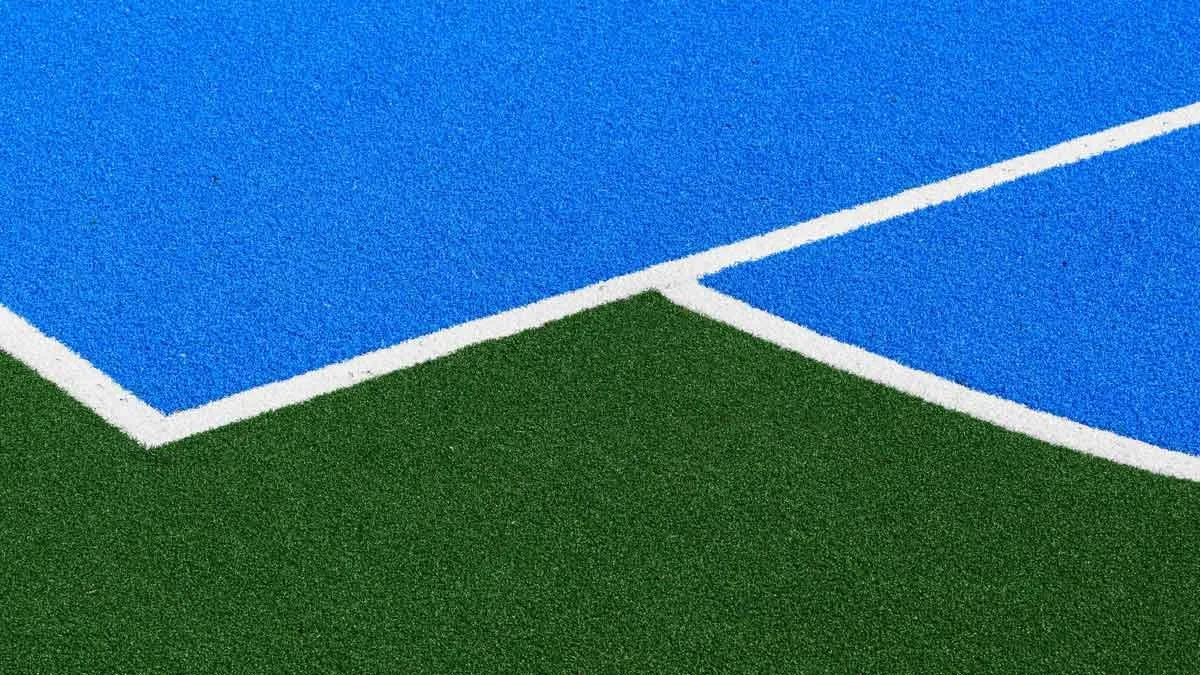
Colour, markings and the overall layout
Both turf and acrylic systems allow a court to become a strong visual feature. Colour can separate playing zones, reinforce school or club identity and make line markings easier to follow. On multi-sport courts, the line plan needs particular care. Too many competing colours can make a court confusing, while a clear hierarchy can help users understand the primary and secondary games.
Goals, hoops, nets, fencing, run-off areas and connections to surrounding spaces should be considered at the same time as the surface. A good court is a complete environment, not simply a coloured rectangle.
So, which surface is right for your project?
Artificial turf may be a strong fit when you want a versatile, comfortable and durable space for intensive school, community or multi-sport use.
Acrylic may be the better fit when a firm, consistent court response is important, particularly for tennis, pickleball, basketball or netball, and the site has a suitable hard base.
For some projects, either option could work well. The decision then comes down to the priority sports, user expectations, site conditions, maintenance capability and available budget.
The most useful starting point is a clear brief: who will use the court, what they will play, how often it will be used and what performance matters most.
Talk to Sportsplay before you lock in the surface
Early advice can prevent a project from being designed around the wrong assumptions.
Sportsplay works with schools, clubs, councils, architects, project managers and private clients to assess the site and recommend a surface system around the intended use.
We can help you compare artificial turf and acrylic options, understand the implications of the existing base and develop a practical court layout for your space.
Planning a new court or resurfacing an existing one? Talk to Sportsplay about the users, sports and site conditions involved, and we’ll help you compare suitable turf and acrylic options.
FAQs
-
It depends on the priority sports, users and desired playing characteristics. Turf can provide a versatile and more forgiving surface for high-use environments, while acrylic offers a firm and consistent court response. A multi-sport design should balance the needs of all intended activities.
-
Yes. Acrylic systems can be designed and line-marked for netball, basketball and multi-sport use, provided the base, dimensions, run-off areas and overall specification are appropriate for the intended level of play.
-
Yes, when a turf system designed for tennis is selected. Pile height, infill and construction affect grip, ball speed and bounce, so the product should be chosen for the required playing experience.
-
Both require planned care. Turf usually needs debris removal, brushing and attention to infill or wear patterns. Acrylic needs cleaning, drainage management and monitoring of the surface and underlying base. Maintenance should be compared across the system’s expected life.
-
Often, but the existing base needs to be assessed first. Cracking, movement, drainage and levels may require repair before a new turf or acrylic system can be installed.